PAHO and RedETSA publish new document on Health Technology Assessment in hospitals in Latin America and the Caribbean
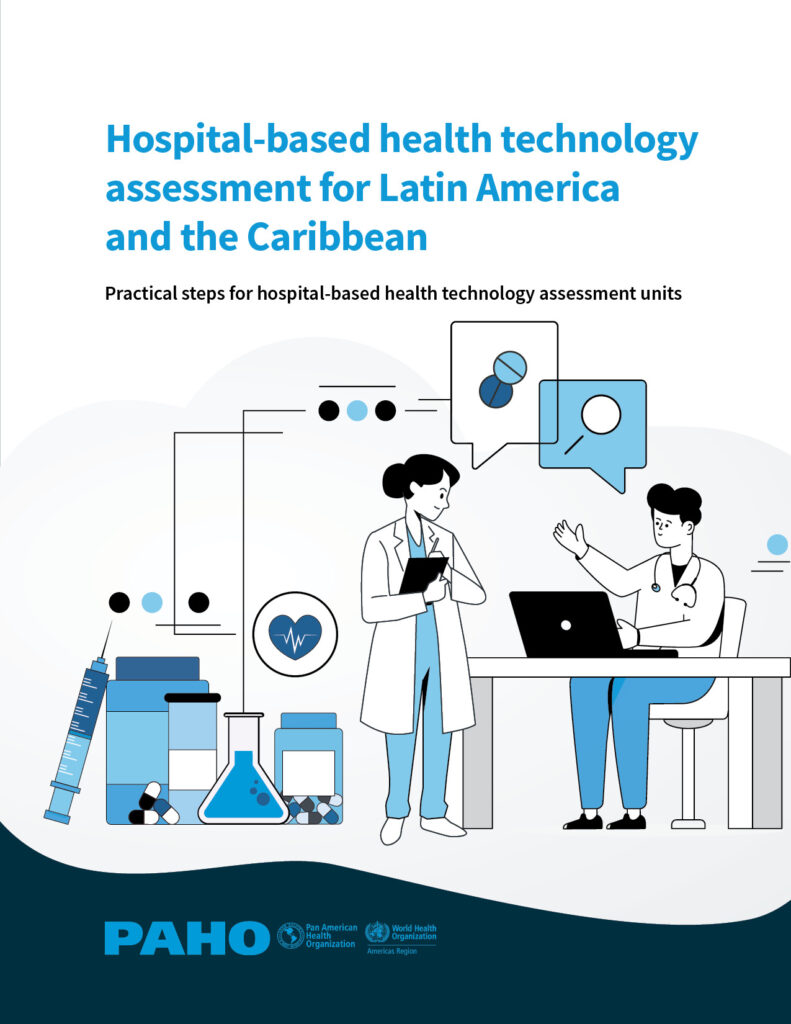
The Pan American Health Organization (PAHO) and the Health Technology Assessment Network of the Americas (RedETSA) are pleased to announce the publication of the document in English Hospital-based health technology assessment for Latin America and the Caribbean: Practical steps for hospital-based health technology assessment units, whose Spanish translation will be available soon.
Health Technology Assessment (HTA) aims to support informed decisions that promote more equitable, efficient, and high-quality health systems, based on scientific evidence and rigorous methods. Although traditionally applied at the macro level (national or provincial), in recent years the organizational perspective has gained relevance, especially in hospitals, due to the increasing availability of new technologies within the institutional setting.
Health Technology Assessment (HTA) in Hospitals allows for the evaluation of whether a technology provides real benefits to the population served by a specific institution, also considering its organizational impact. This approach aims to offer hospital decision-makers reliable and contextualized evidence for the adoption of new technologies, in an environment marked by challenges such as constant innovation and budget constraints.
The new report, developed in collaboration with the Brazilian Institute of Cardiology, aims to support institutions interested in implementing HTA at the hospital level, adapting international recommendations to the Latin American and Caribbean (LAC) context. The document provides an overview of HTA use in hospitals across the region, along with practical steps and key principles for local implementation.
The report was prepared based on a review of documents from international STD agencies, an exploration of publications on the subject in LAC, and a survey among RedETSA members.
The institutionalization of STIs in hospitals requires appropriate organizational structures and trained personnel. Whenever possible, the creation of dedicated local STI units, supported by regulatory frameworks, is recommended to strengthen decision-making and make it more transparent, efficient, and evidence-based.


 English
  Español
  Português do Brasil